Approximately 80% of Marbella property buyers choose apartments over villas. This is despite...Read More
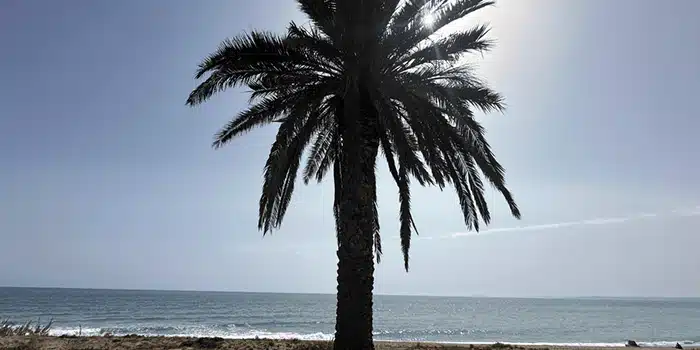
Puerto Banús in Marbella opened in May 1970 as a luxury marina built by Spanish developer José Banús. It was designed as an Andalusian village rather than a high-rise marina. The opening was attended by Prince Rainier and Princess Grace of Monaco, the Aga Khan, and the Spanish royal family. Julio Iglesias performed for the 1,700 invited guests. Within a decade the marina had become one of Europe’s most recognised luxury destinations, a status it has held since. This guide covers what Puerto Banús Marbella actually is. We look at its origins, its design, and the developer’s vision. We cover how it became the crown jewel of the Costa del Sol, and what defines the area in 2026.
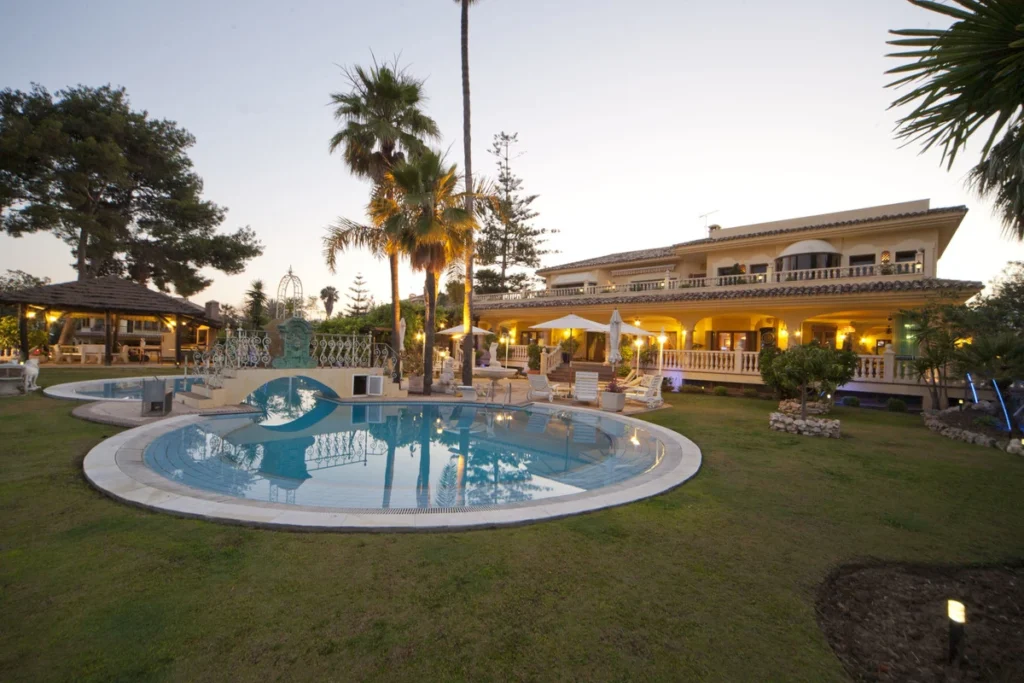
Puerto Banús is on the western edge of the Marbella municipality, approximately 6.5 kilometres west of the historic centre of Marbella town. It sits at the western end of the Marbella Golden Mile, separated from Nueva Andalucía to the north by the N-340 coastal road. To the west, the marina borders the wider San Pedro de Alcántara area.
The full name of the marina is Puerto José Banús, named after the developer. Locally it is referred to as Puerto Banús or simply Banús. The location is strategic: equidistant between Marbella town and San Pedro, accessible by the Paseo Marítimo coastal walking and cycling promenade from both directions, and connected to Málaga Airport by approximately 40 minutes on the AP-7 motorway.
The story of Puerto Banús in Marbella starts with Prince Alfonso von Hohenlohe-Langenburg, who opened the Marbella Club Hotel in 1954. By the early 1960s, Marbella had become a fashionable destination for European aristocracy and Hollywood celebrities, with the Marbella Club at the social centre. Hohenlohe needed a marina; the existing harbour at Marbella town was small and could not accommodate the yacht traffic that was beginning to arrive.
José Banús was a Spanish property developer and a friend of Hohenlohe. He had built much of post-war Madrid’s social housing for the Franco regime and was looking for a marquee development project. Hohenlohe pointed him at the stretch of coast west of Marbella town. Banús purchased the land, secured the licences, and began construction.
The original architectural plans reportedly proposed high-rise apartment blocks around the marina. Banús rejected them. He wanted what he later described as a “luxurious paradise for millionaires and celebrities”, and the high-rise design did not fit. The brief was rewritten around the concept of an Andalusian village: low-rise whitewashed buildings, narrow walkable streets, tiled roofs, and a marina that felt like the centre of the village rather than a separate harbour.
Construction took roughly three years. The marina opened on 28 May 1970. The inauguration guest list reads like a Who’s Who of late-1960s European society: Prince Rainier III and Princess Grace of Monaco, the Aga Khan IV, members of the Spanish royal family, and a wide group of European aristocracy and entertainment figures. Julio Iglesias performed for the 1,700 invited guests.
The original design has been preserved better than most equivalent developments of the period. The buildings around the marina remain low-rise. The pedestrian streets remain walkable. The marina layout is essentially unchanged from 1970, though successive owners have added moorings and expanded the commercial offering.
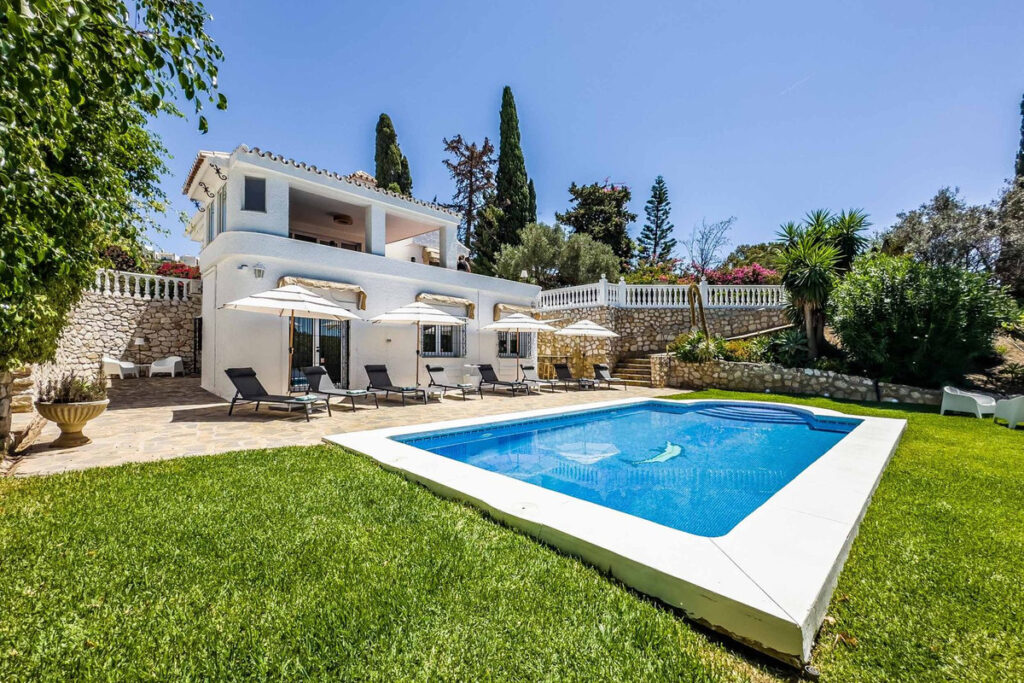
Puerto Banús marina holds approximately 915 berths, ranging from small craft moorings (8–10 metres) to superyacht berths capable of accommodating vessels over 50 metres. The harbour is naturally protected by the layout of the surrounding land and a breakwater extending into the Mediterranean.
The marina is a working port as well as a tourist destination. Yacht charter operators run from Banús. Marine services (fuelling, repairs, provisioning) cluster around the inner harbour. The Spanish Maritime Police maintain a permanent presence. The Royal Spanish Sailing Federation runs events from the marina across the year.
For property owners in Puerto Banús, marina berth access is separate from property ownership. Berths are leased annually or sold long-term; supply is tight and prices for prime superyacht moorings are firm. Owners with their own yachts typically secure berth access early in the buying process; many berths transfer with right-of-renewal clauses rather than as outright sales.
The architectural distinctiveness of Puerto Banús is the single most consistent comment from visitors. Unlike the high-rise developments that came to dominate other Costa del Sol marinas (notably Fuengirola and Torremolinos), Banús preserved the village concept.
The buildings around the marina are mostly two- and three-storey, in the traditional Andalusian style: whitewashed walls, terracotta roofs, wrought-iron balconies, and narrow pedestrian streets. The retail and dining ground floors give onto the streets and the marina front; the apartments above face the harbour, the streets, or the inland sea views.
Three architectural details that define the area:
The marina arches. The covered walkways around the inner harbour follow traditional Andalusian arched colonnades, providing shade for diners and shoppers along the marina front.
Plaza Antonio Banderas. The central square at the western end of the marina, named after the Marbella-born Hollywood actor, hosts seasonal events and serves as the social anchor of the pedestrian streets.
The pedestrian street layout. Banús’ streets follow a roughly grid pattern but with intentional irregularity, creating sight lines and pocket squares rather than long straight runs. The effect is closer to a Mediterranean old town than a planned development.
The total enclosed area of the marina-front commercial and residential cluster is approximately 100,000 m², which is small enough to walk end-to-end in 15 minutes but dense enough to support over 60 restaurants, more than 30 designer retail outlets, and roughly a dozen nightlife venues.
Several factors combined to give Puerto Banús its enduring status as the most famous address in Marbella.
The timing. The marina opened at the exact moment when international tourism to the Costa del Sol was accelerating but before mass-market development had altered the character of the coast. Banús arrived as the area was becoming famous but before it became crowded.
The guest list. The 1970 opening attendance set the tone. The Marbella Club was already a magnet for European aristocracy; the marina opening confirmed Banús as part of the same circuit. The Aga Khan, the Spanish royal family, and the Monaco connection gave the marina an instant social pedigree that was difficult for any competing development to replicate.
The brand consolidation through the 1980s and 1990s. As Marbella became a major international destination, Banús was the address that received the bulk of the celebrity and high-net-worth traffic. The retail mix consolidated around international luxury brands. The dining scene moved upmarket. The marina expanded its capacity to handle the largest yachts. By the late 1990s, “Puerto Banús” had become a shorthand for Mediterranean luxury in the same way that “Saint-Tropez” or “Portofino” function as international brand names.
The persistence of the design. While many equivalent marinas around the Mediterranean have lost their architectural distinctiveness through expansion and redevelopment, Banús’ core layout has remained substantially as designed. The 1970 village has not been replaced with high-rise development. This continuity has helped preserve the area’s premium positioning.
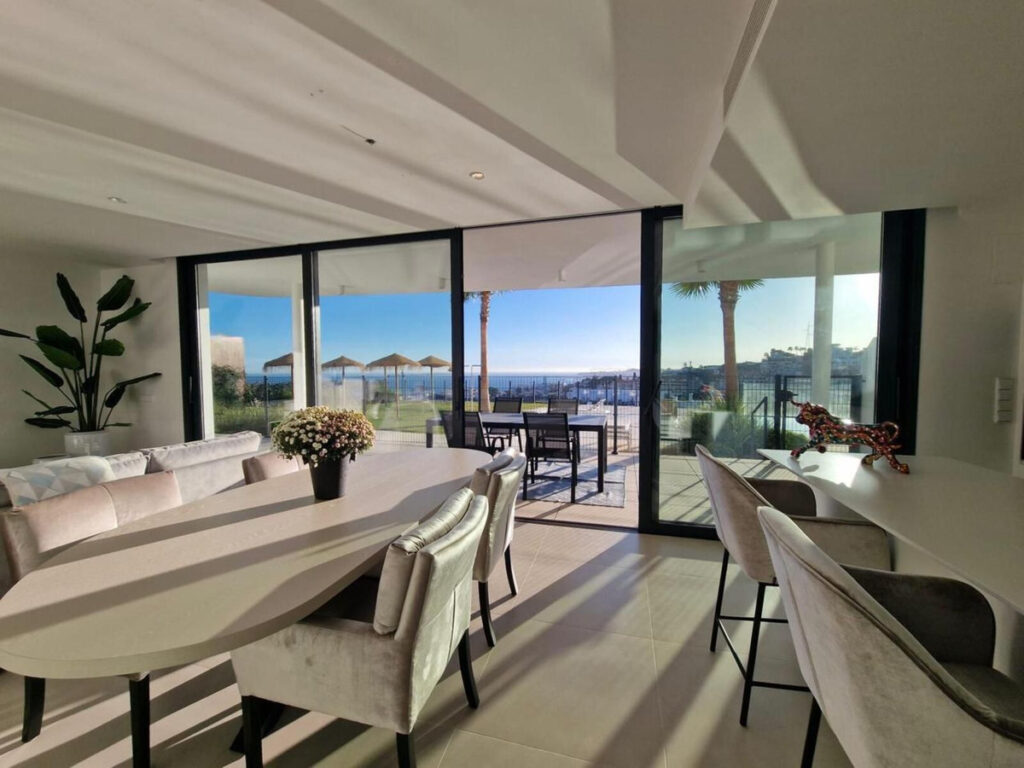
In 2026, Puerto Banús operates across three overlapping economies.
The marine economy. Puerto Banús in Marbella operates as a full working marina, with berths, charter operations, yacht servicing, and the supporting marine infrastructure. This runs year-round, with peak activity in summer and a quieter but still significant winter rhythm. Many superyachts that summer in Banús winter in Mallorca, Antibes, or further east.
The dining and nightlife economy. Over 60 restaurants spanning every cuisine and price point. The major venues (the Puente Romano cluster sitting just to the east, the marina-front restaurants, and the inland streets) run at capacity from May to September and operate reduced hours through the winter. The nightlife scene anchored by Olivia Valère (a 25-minute walk inland, modelled on an Arabian palace) and Pangea remains one of the most internationally recognised in Europe.
The retail economy. Designer flagships from Louis Vuitton, Dior, Gucci, Chanel, Hermès, Cartier, Bvlgari, and most major international brands line the marina-front streets. El Corte Inglés operates a full department store one street inland. The retail mix has shifted slightly toward experience-led concept stores over the past five years but remains dominated by traditional luxury retail.
The property market is anchored by the beachfront apartment complexes immediately west and east of the marina (Los Granados, Andalucía del Mar, Playas del Duque) and supported by a wider portfolio of walk-to-marina complexes that price below the beachfront tier.
Two ongoing shifts in Puerto Banús in Marbella are worth noting.
Year-round residence is growing. Historically Puerto Banús was a strongly seasonal destination, with peak-summer concentration and quieter winter months. Since 2020, the share of full-year residents has grown noticeably, particularly among remote-working professionals using the digital nomad visa and downsizing buyers moving from larger properties elsewhere in Marbella. This is shifting the rhythm of the area slightly toward year-round activity, though the seasonal pattern is still pronounced.
Sustainability and design renewal. Several apartment complexes have undertaken substantial renovation programmes since 2022, modernising older 1970s and 1980s buildings to current standards. New development is heavily restricted by the protected village layout, so the renovation route is the main vehicle for refreshing the stock. Buyers entering the market in 2026 typically encounter a mix of original-condition apartments needing significant refurbishment and recently renovated examples at meaningful premiums.
Crinoa works across all tiers of the Puerto Banús property market, from entry-level apartments in walk-to-marina complexes through prime duplex penthouses in Los Granados, Andalucía del Mar, and Playas del Duque. If you are looking at Puerto Banús and want a tailored shortlist matched to your usage pattern, budget, and complex preferences, including off-market plots not advertised on the public portals, we can pull one together.
For more detail on the property market itself, see our Puerto Banús buyer’s guide, or contact us directly to talk to an expert.
Are you considering choosing us to sell your property? Or do you want to schedule a viewing? Please complete the contact form below, and we’ll respond as soon as we can.
Puerto Banús in Marbella is a luxury marina and surrounding residential and commercial area, built in 1970 by Spanish developer José Banús. It sits at the western end of the Marbella Golden Mile, holds approximately 915 marina berths, and is internationally recognised as one of the premier Mediterranean luxury destinations alongside Saint-Tropez and Portofino.
Puerto Banús was built by José Banús, a Spanish property developer and friend of Marbella Club founder Prince Alfonso von Hohenlohe. Banús had built much of post-war Madrid’s social housing for the Spanish government and developed the marina at Hohenlohe’s suggestion. Construction took roughly three years; the marina opened on 28 May 1970.
Several factors combined: the timing of the 1970 opening at the start of Costa del Sol’s international tourism boom, the high-profile guest list at the inauguration (Prince Rainier and Princess Grace of Monaco, the Aga Khan, the Spanish royal family), the consistent architectural identity (the Andalusian village layout has been preserved largely unchanged), and the consolidation of international luxury retail and dining around the marina through the 1980s and 1990s.
Yes. Puerto Banús is part of the Marbella municipality, sitting in the wider Nueva Andalucía area approximately 6.5 kilometres west of central Marbella town. It is connected to Marbella town by the N-340 coastal road and the Paseo Marítimo coastal promenade. Administratively it is not a separate district but a defined commercial and residential area within Marbella.
The marina holds approximately 915 berths, ranging from small craft moorings (8–10 metres) to superyacht berths capable of accommodating vessels over 50 metres. The marina is one of the largest superyacht-capable harbours in southern Spain and supports a year-round marine economy including charter operations, yacht servicing, and provisioning.
The marina supports over 60 restaurants, more than 30 designer retail outlets (Louis Vuitton, Dior, Gucci, Chanel, Hermès, Cartier, and most major international brands), El Corte Inglés department store one street inland, a dozen nightlife venues including the historically famous Olivia Valère and Pangea, several beach clubs (Ocean Club is the most established), and the marina activities themselves. Outside peak summer the rhythm slows considerably, with some venues operating reduced hours from November to March.
Approximately 80% of Marbella property buyers choose apartments over villas. This is despite...Read More
Beachfront property in Puerto Banús is the most concentrated cluster of frontline apartment...Read More
La Zagaleta property for sale spans 900 hectares of gated Benahavís hillside, with...Read More
International schools in Marbella cluster around three main catchment areas: Nueva Andalucía (Aloha...Read More
Frontline beach in Marbella commands a typical premium of 30–50% over the equivalent...Read More
Puerto Banús in Marbella opened in May 1970 as a luxury marina built...Read More
We use cookies to improve your experience on our site. By using our site, you consent to cookies.
Manage your cookie preferences below:
Essential cookies enable basic functions and are necessary for the proper function of the website.
Google reCAPTCHA helps protect websites from spam and abuse by verifying user interactions through challenges.
Google Tag Manager simplifies the management of marketing tags on your website without code changes.
Statistics cookies collect information anonymously. This information helps us understand how visitors use our website.
Google Analytics is a powerful tool that tracks and analyzes website traffic for informed marketing decisions.
Service URL: policies.google.com (opens in a new window)
You can find more information in our Cookie Policy and Privacy Policy.
This feature is under construction and will be live shortly.