
To retire in Spain in 2026, a non-EU citizen needs a residence visa, proof of about €28,800 a year in pension or passive income, and private health insurance. There is no dedicated retirement visa, so most retirees use the Non-Lucrative Visa. This guide covers the income test, healthcare, tax, and where foreign buyers actually settle on the coast.
What to know
- Retirees need to prove roughly €28,800 a year in passive income for one applicant, plus €7,200 for each dependant.
- US Social Security and UK, Irish, or private pensions all count as qualifying income, shown through an official award letter.
- Buying a home does not grant residency, since Spain closed the Golden Visa to new applicants in April 2025.

Can a foreigner retire in Spain in 2026?
Yes. A non-EU citizen can retire in Spain in 2026 by obtaining a long-stay residence visa before moving. A passport alone allows only 90 days in any 180-day period. Spain has no visa labelled “retirement”, so retirees apply for the Non-Lucrative Visa, which permits residence on passive income without any work.
This is the standard route for American, British, and other non-EU pensioners, and it became the main path after the Golden Visa closed. The permit lasts one year, then renews in two-year blocks, and after five continuous years it converts to permanent residency. Citizenship becomes possible after ten years for most nationalities.
The visa is applied for from your home country. Americans file at the Spanish consulate covering their state; Britons at the consulate covering their region. The 90-day tourist entry cannot be converted into residency once you are in Spain, so the paperwork has to be finished first.
How much income do you need to retire in Spain?
To retire in Spain on the Non-Lucrative Visa you must prove about €28,800 a year in passive income for the main applicant in 2026. That is 400 percent of Spain’s IPREM index, plus €7,200 for each dependant. Because the IPREM stayed frozen at €600 a month, that figure is unchanged from 2024 and 2025.
For a retired couple that means roughly €36,000 a year. The income can come from a state pension, a private or workplace pension, dividends, rental income, or annuities. Savings can stand in where regular income falls short. Consulates typically want to see six to twelve months of statements or an official pension award letter.
Your existing pension usually qualifies. US Social Security counts as recurring income for the visa, as do UK, Irish, and other state and private pensions. You supply an official statement showing the amount and that it is ongoing. This is the single most common income source among retiree applicants.

What healthcare will you have when you retire in Spain?
Non-Lucrative Visa holders must hold comprehensive private health insurance to get the visa. The route bans work, so it gives no access to Spain’s contribution-based public system at the outset. The policy must come from an insurer authorised in Spain, with full cover, no co-payments, and no waiting periods.
After establishing residency, access to public healthcare depends on nationality and route. British pensioners drawing a UK state pension can often register for Spanish public cover through the S1 form, which shifts the cost to the UK. American retirees, who have no equivalent arrangement, generally keep private insurance long-term or pay into Spain’s public convenio especial scheme once eligible.
Budget insurance as a fixed annual cost. For older applicants, a compliant private policy is a meaningful yearly expense, and it must be in place before the visa file is submitted. Medicare does not cover you in Spain, so it cannot substitute for a Spanish-spec policy.
What does it cost to retire in Spain?
Most retirees live comfortably in Spain on roughly €20,000 to €35,000 a year, with day-to-day costs generally lower than in the US or the UK. The number swings widely by location: Madrid, Barcelona, and central Marbella sit at the top, while smaller towns across Andalucía run considerably cheaper.
The strength of the figure for many retirees is what a familiar income buys. A US Social Security cheque or a UK pension that feels tight at home tends to stretch further in Spain. That holds for rents, groceries, and dining, particularly away from the prime coastal streets. That gap in everyday cost is a large part of why the coast draws so many foreign retirees.
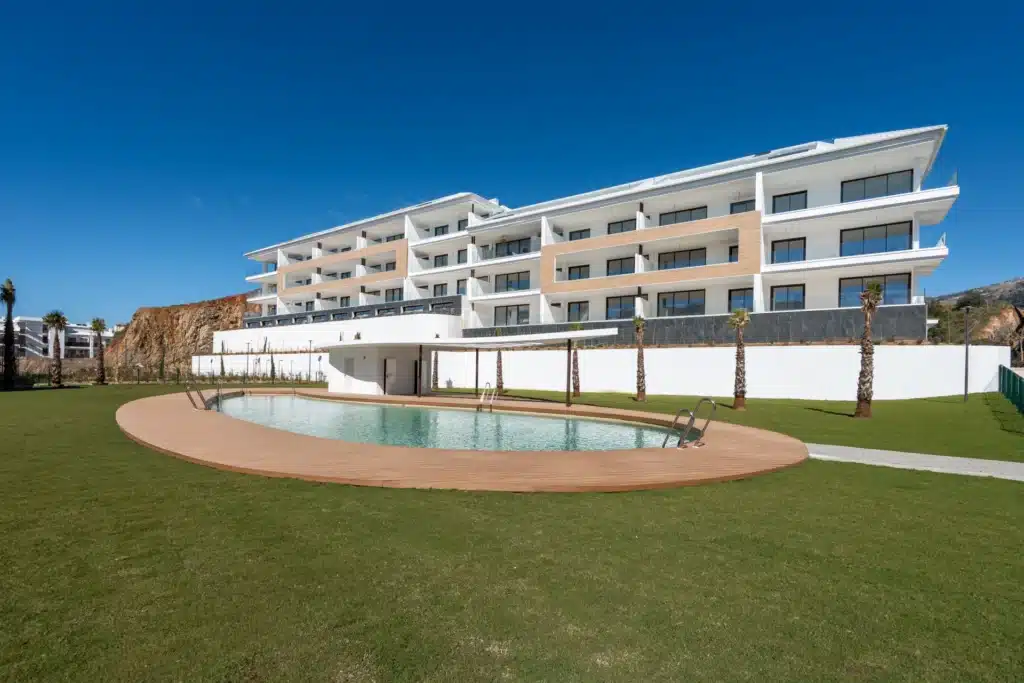
Property is the one cost that varies most. Buying on the Costa del Sol spans a wide range, and total purchase costs add 10 to 15 percent on top of the price. Resale homes in Andalucía carry a flat 7 percent transfer tax, among the lowest in mainland Spain, while new-builds carry 10 percent VAT plus 1.5 percent stamp duty.

How are retirees taxed in Spain?
Once you spend more than 183 days a year in Spain you become a Spanish tax resident, taxed on your worldwide income including foreign pensions. Progressive rates run from 19 to 47 percent depending on the region. Because the Non-Lucrative Visa now requires more than 183 days a year to renew, most retirees on it are tax residents in practice.
Double-tax treaties prevent the same income being taxed twice. Spain has treaties with both the US and the UK, and they set which country taxes which income, with the Foreign Tax Credit or exemption reconciling the rest. Government pensions are often taxable only in the home country. Private pensions and Social Security are frequently taxable in Spain, so the split depends on the pension type.
Americans file twice, every year. The United States taxes its citizens on worldwide income wherever they live, so a US retiree in Spain files both a US and a Spanish return. A cross-border tax adviser is a fixed cost of retiring in Spain, not an optional one, and worth engaging before the move rather than after.
Where do foreign buyers retire on the Costa del Sol?
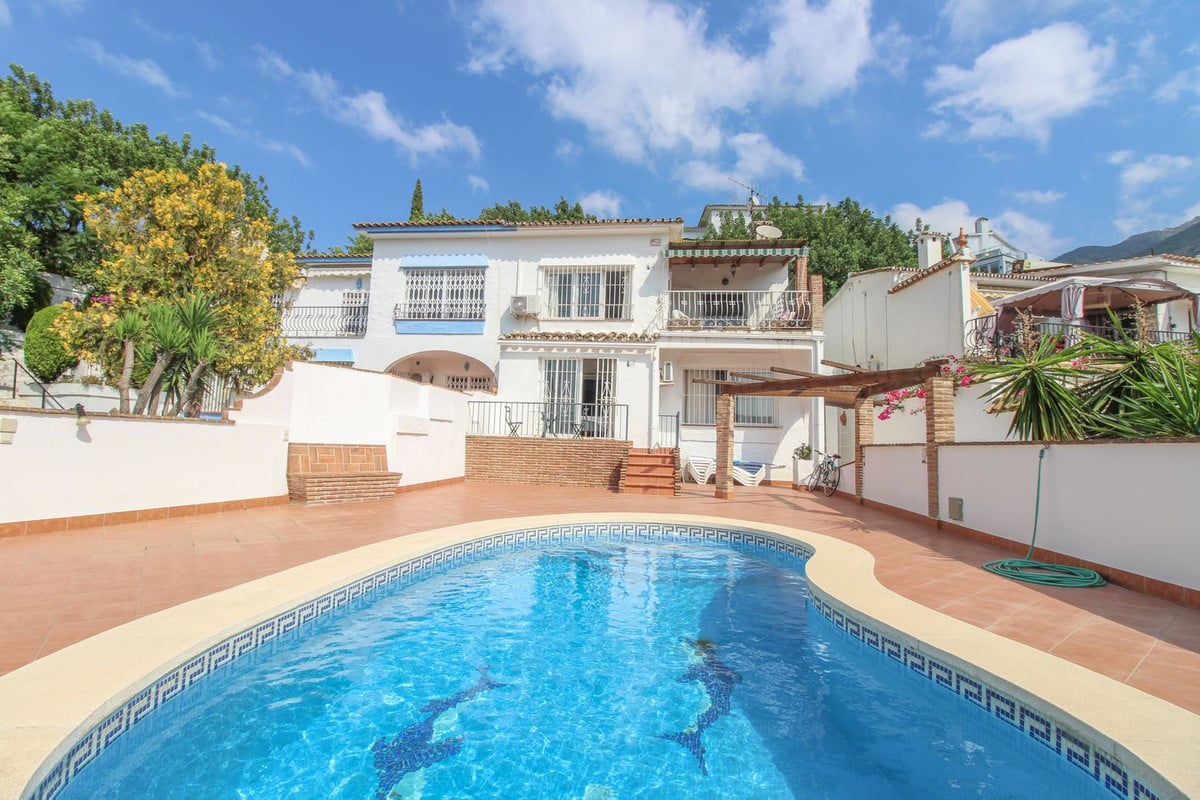
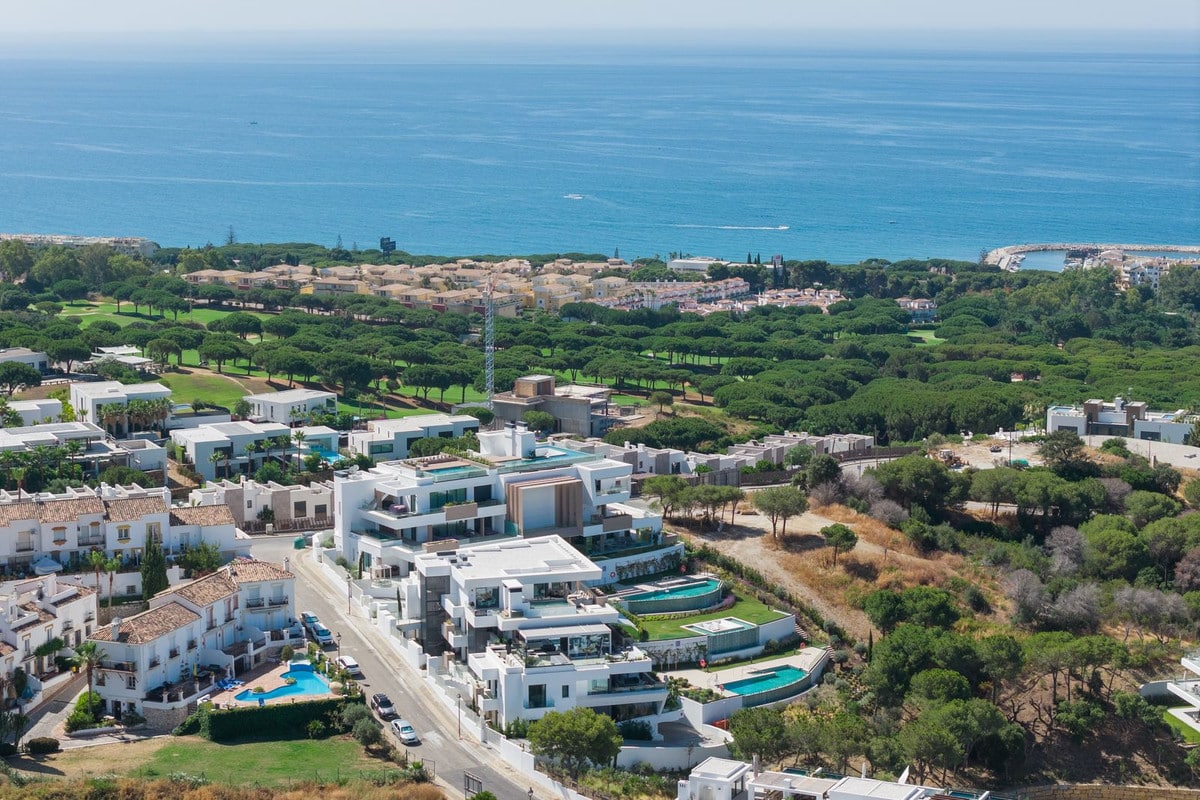
Most foreign retirees on the coast concentrate around Marbella and its neighbouring towns, drawn by an established English-speaking community, direct flights through Málaga, and year-round mild weather. Marbella, Estepona, and Benahavís form the core of the search, each answering a slightly different retirement brief.
Marbella offers the fullest amenity base, the best healthcare access, and the widest choice of resale homes, which suits retirees who want everything close at hand. Estepona has grown into a quieter, more traditional alternative along the same coast, with a walkable old town that consistently surprises visitors. Benahavís, set inland and green, pairs larger plots with golf and gastronomy for those wanting more space and calm.
For a fuller look at one of the most popular retirement towns, our Living in Estepona area guide covers neighbourhoods, healthcare, and daily life in detail.
How do the visa and the property search fit together?
Settle the visa route first, then choose the home to fit it. The residency terms decide how much of the year you must spend in Spain and what tax you pay. A retiree planning to live on the coast most of the year fits the Non-Lucrative Visa cleanly; someone wanting to split the year across countries may not.
The sequencing changed when the Golden Visa ended. A property purchase no longer carries any residency entitlement. The home and the permit are separate decisions, planned together but no longer unlocking each other. Our Spain Golden Visa update explains what closed and what replaced it, and our Spain Non-Lucrative Visa guide covers the retiree route in full.
Ready to plan your retirement on the coast?
Retiring in Spain rewards buyers who line up the visa, the healthcare, the tax plan, and the property search in the right order. Crinoa works with international buyers across Marbella, Estepona, and Benahavís, and can connect your search to the lawyers and advisers who handle the residency side. Browse current listings on the Crinoa page to start.